

STANFORD UNIVERSITY SCHOLARSHIPS
Stanford university is one the top university in the providing quality education to national and international students. A fully funded scholarship is provided to foreign bright students.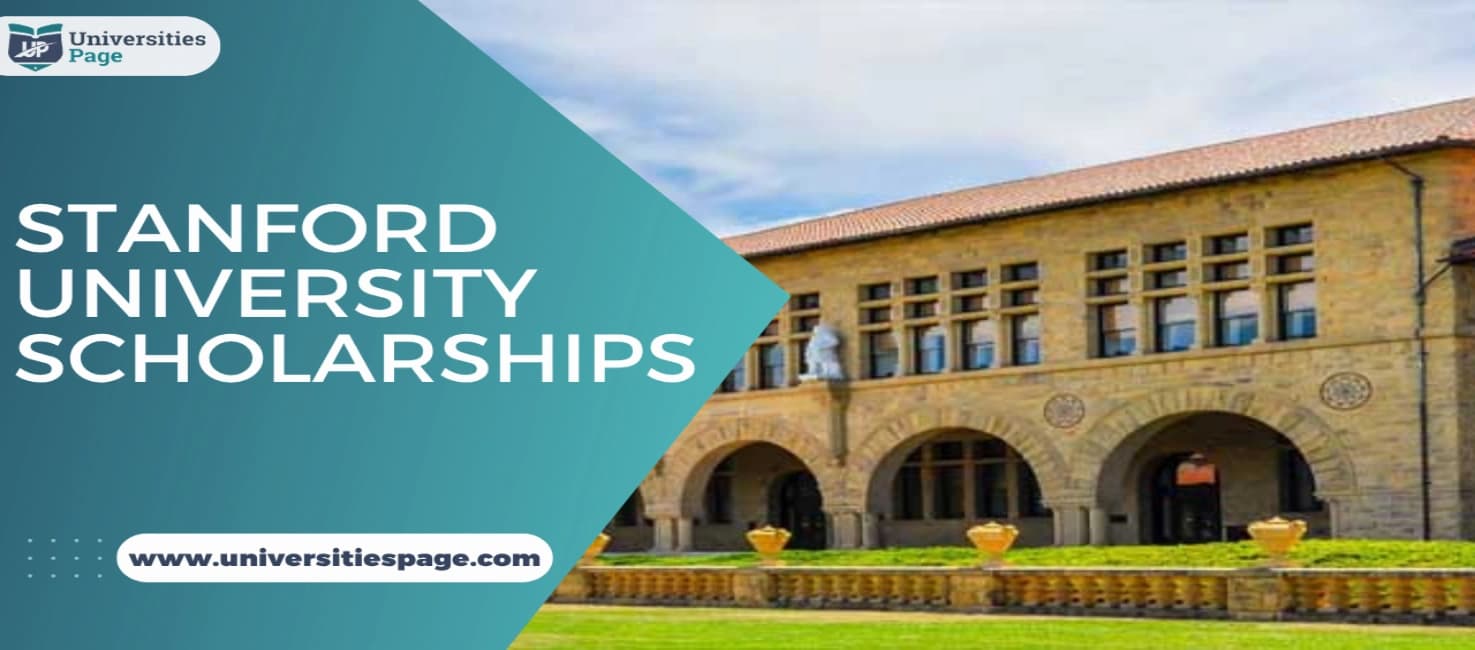
Standford University Scholarship is a Fully Funded Scholarship for Pakistani Students pursuing higher education in the USA. The USA has top-ranked Universities and Scholarships. The Scholarship benefits include a monthly Stipend and an air ticket. The IELTS is Optional for the Standford University Scholarship. The eligibility criteria are that the student must have a complete degree and previous experience in the relevant field. This Scholarship is available for bachelor’s, master’s, and PhD Students. The Bank Statement is not required for this Scholarship if you have fully funded Scholarships. The Visa Ratio in the USA is 95% for Scholarship holders. There is no need for a test for this Scholarship. The Cover Letter is the most Important Thing for winning a Scholarship. Standford University Provides Free Online Courses for International Students.
|
Stanford University Scholarship |
|
|
Teaching Language |
English |
|
Country |
United States (California) |
|
Top universities in the US |
|
|
Scholarship duration |
|
|
Scholarship Type |
Fully funded or partially funded, The knight-Hennessy scholarship is a fully funded
scholarship |
|
Eligibility Criteria |
It depends on the: Financial needs Academic excellence Research potential Alignment with the focus of the program |
|
IELTS Requirements |
Does not require prior education in English |
|
CGPA Requirements |
No CGPA requirement |
|
Part-time Jobs |
Students who have F-1 visas can work part-time
jobs up to 20 hours per week during the academic year |
|
Average monthly expense |
$ 1500 - $ 3000 |
|
Scholarship Processing Time |
For undergraduate programs application process
follows the timeline of admission, For graduate programs it follows the application
deadlines |
|
Entry Test |
For undergraduates, SAT or ACT is required, For graduates, the GRE required |
|
Programs available |
Undergraduates, Masters, PhD |
Scholarship Summary:
|
Scholarships Summary |
|
|
Study level: |
Bachelor’s, master’s, PhD |
|
Institution(s): |
Stanford University |
|
Country: |
USA |
|
Courses Offered: |
education, arts, engineering, humanities, social sciences, business, law, medicine, etc. |
|
Duration of program: |
The Knight-Hennessy Scholars database covers the
first three years of graduate school. If a degree program, such as an MD or PhD
program, lasts more than three years, the Stanford home department will plan
for funding. |
Scholarship types:
For undergraduates' there are scholarships that are need-based and categorized into four further types:
For masters, there is a scholarship called the
Knight-Henessy scholarship.
Departments to study:
For undergraduates’ level
- Computer science
- Human biology
- Econometrics and quantitative economics
- Engineering (Materials Engineering,
Engineering or Industrial management, Electrical and electronics engineering,
Mechanical engineering, Chemical engineering)
- Political science
- Mathematics
- Research
- Government
- Experimental psychology
- Cognitive science
- Biology (biological sciences)
- Applied mathematics
- Technology, science, and society
- Geology/earth science
- Bioengineering and biomedical engineering
- International relations and concerns
- Physics
- History
- Communication and media studies
- Public policy analysis
- Philosophy
- Sociology
- Literature and linguistics
- Fine arts
- Music
- Environmental health engineering
- Chemistry
- Urban studies/affairs
- United States studies
- Comparative literature
- Linguistics
- Film/cinema/video studies
- African-American/black studies
- Aerospace, aeronautical, and space engineering
- Art history, criticism, and conservation
- Anthropology
- Drama and dramatics/theatre arts
- East Asian studies
- Philosophy and religious studies
- Area studies
- German language and literature
- Geophysics and seismology
- American Indian/Native American studies
- Russian language and literature
- Religion/religious studies
- Hispanic-American and Mexican American
- Civil engineering
- Italian language and literature
- Geological and earth sciences/geosciences
For master’s level
- Aeronautics and astronautics
- Applied Physics
- Chemical engineering
- Art practice
- Bioengineering
- Biomedical data science
- Communication
- Civil and environmental engineering
- Clinical informatics management
- Community health and prevention research
- Computational and mathematics engineering
- computer science
- Documentary film and video
- Earth and planetary sciences
- Earth system sciences
- East Asian studies
- Education
- Energy science
- Design
- Epidemiology and clinical research
- German studies
- French Studies
- Geophysics
- Health policy
- History
- Human genetics and genetics counseling
- International policy
- Laboratory animal sciences
- Latin American studies
- Management science and engineering
- Masters of liberal arts
- Material science and engineering
- Music
- Philosophy
- Public policy
- Russian and Eurasian studies
- Language and Literature of Slavic
- Statistics
- Symbolic systems
Translational research and applied medicine
For doctoral level
- Aeronautics and astronautics
- Applied Physics
- History of Art
- Biochemistry
- Biology (Chemical and system biology,
Developmental biology, Molecular and cellular biology, Structural biology)
- Data science of Biomedical
- Biophysics
- Cancer studies
- Classics
- Computational and mathematical engineering
- Computer science
- Earth and planetary science (Earth system
science)
- East Asian languages and cultures
- Chemical engineering
- Economics
- Electrical engineering
- English
- Chemistry
- Epidemiology and clinical research
- Genetics (Stem cell biology and regenerative
medicine, Bioengineering)
- Geophysics
- Health policy
- History
- Immunology
- Linguistics (French and Italian, German
studies)
- Management science and engineering
- Material science and engineering
- Civil and environmental engineering
- Mathematics
- Mechanical engineering
- Microbiology and immunology
- Modern thought and literature
- Energy science and engineering
- Neurosciences
- Philosophy
- Physics
- Environment and resources
- Political science
- Environmental social science
- Psychology
- Slavic language and literature
- Sociology
- Statistics
- Theater and performance studies
Scholarship Coverage:
The normal scholarship amount for the recent newcomer class getting need-based aid is $70,349. This includes an average Stanford scholarship of $62,898 and funding from federal, state, and private sources. The table below summarizes the regular overall scholarship and grant amounts according to income range.
|
Gross Family Income |
Regular Scholarship and Allowance |
|
Fewer than $ 75,000 |
92,303 |
|
75,001 - 100,000 |
87,348 |
|
100,001 - 125,000 |
76,834 |
|
125,001 - 150,000 |
69,600 |
|
150,001 - 200,000 |
57,205 |
Appropriateness for Stanford scholarship funds
is regulated not only by the personal salary of the family but also by aspects
such as family size, the number of family members in college, and family
assets.
Eligibility criteria:
Undergraduate Basics
For undergraduates, the scholarship is need-based. The financial support program is need-based, and eligibility is centered on the family's economic situation. The committees employ a consistent way to evaluate the family's financial situation and determine the predictable input from parents, if possible. If it is found that the student cannot meet the budget with contributions, they will offer or acclaim scholarships, grants, or additional resources to back up the student.
Graduate Basics
Stanford suggests a variety of funding choices for graduate students, which may be based on merit-based, need-based, or degree programs. Maximum fellowships and grants are found through academic branches, external agencies, or government sources. International students are not capable for student loans from Stanford or U.S. government agencies. However, as an international apprentice, you can apply for assistantships and fellowships from the desired department. Although, private student loan options are available.
Many private moneylenders will consider international students as a cosignatory if they have a U.S. citizen. A cosigner is an individual who approves authorized accountability for the loan if a student fails to make payments. There are also choices for apprentices without a cosigner or credit antiquity. They can take loans.
Some of the loan categories are:
- Federal Direct Loans
- Federal Direct PLUS Loans
- Other Loans
- Private/Alternative Student Loans
- Private/Alternative Parent Loans
- Graduate Housing Loan
- Dorothy Durfee Avery/GSE Loan
- Federal TEACH Grant/Loan
- Federal Perkins Loans
The Knight-Hennessy scholarship is a fantastic opportunity for master's students. Only master's students are eligible to apply; undergraduates may only do so for the teaching and research assistantships. To be eligible for this opportunity, students must complete an additional scholarship application. It offers several advantages, including the ability for students to participate in summer internships and subsequently spend the money earned. Aside from this, they can work 20 hours on campus every week.
Full Funding: Besides health insurance, this scholarship covers a very good amount as a stipend for maintaining a living. The Knight Hennessy Scholarship is thus intended to provide financial support to students for the full duration of their graduate studies at Stanford. The following are the Knight Hennessy scholarship inclusive benefits:
- Full Funding: Provide a generous
stipend to cover living expenses, including health insurance, in addition to
paying all tuition and fees that are usually charged by the graduate
institution, without exception. The goal line of this grant is to provide students
with financial aid during their whole degree program.
- Global Community: In addition to
students from other disciplines, scholars become part of an extended, global
community that encourages collaboration and interprofessional education. This
offers invaluable opportunities for networking, mentoring, and personal growth.
- Leadership Development: The program
places great emphasis on leadership training through seminars, workshops, and
practical learning. Scholars can take on challenging global issues; they are
groomed for prestigious roles in their respective fields.
- Personal and Professional Development: Discussions, research projects, internships, and other opportunities for professional development are covered financially for scholars. This develops their academic and professional outlooks.
- Community and Mentorship: The program
helps the scholars positively reach their academic experience and professional
path by guiding them on a one-on-one basis with teachers, industrial experts,
and alumni.
- Stanford Resources. Reaching out to
Stanford's vast resources, ranging from world-class research labs to academic
support to a vibrant campus community, students have at their fingertips a
wealth of tools to ensure their success.
- Opportunities for Multi-Disciplinary Education: Students at Stanford can be involved in research projects through other departments and schools. Critical thinking and creative problem-solving are encouraged in the cross-disciplinary approach that allows students to integrate knowledge across disciplines.
- Personalized Learning Environment: To make the academic and research activities personalized, every graduate is assigned an advisor to tailor their degree to meet their very own interest and career goals. This individualized strategy optimizes their potential for effect and improves the educational experience overall.
International students need to have an
Individual Taxpayer Identification Number (ITIN) or Social Security number
(SSN) to be eligible for university scholarship monies. Keep in mind that
applying for financial aid does not require an SSN or ITIN.
Required documents:
- Transcript of all previous academic
performance
- A Resume
- Two recommendation letters
- Essay (students must submit essays totaling no more than 1,750 words for both essays) comprises that
1. Attach the dots. How have the inspirations in your life molded you?
2.How will you follow your life’s occupation? How will your Stanford education and your Knight-Hennessy Scholars involvement support this?
- Two brief answer replies (Please list
three goal lines that you are working toward later)
- Video story: (maximum two minutes introductory video, if the duration is only for 30 seconds that’s acceptable too. There is no compulsion for the student to express for the maximum time)
- In-person assessment
Language Criteria:
Language criteria vary from department to department. Mostly
it is exempted, if the student has studied all previous courses in English.
How to Apply for the Stanford Scholarship?
- The process to apply for the Stanford scholarship is online
through their official portal.
- Students have to make the CSS profile, based on this profile
scholarship availability and whether it will be awarded or not be determined.
- Students have also filled out the parent tax documentation
form.
- Many universities in the United States suggest institutional
economic aid to international students and need to evaluate financial
circumstances within the situation of the local economy of students.
- The CSS Profile application gathers details about a
student's family’s income, assets, and expenses. Students and their parents can
fill in the information in their home currency, and experts will handle the
currency conversion.
- CSS’ software service platform is based in the United
States, so the information will be automatically transferred from the location
of the student to the U.S.
Scholarship award benefits: (for Bachelor's, masters/PhD)
- Fellowship: It
directly covers the tuition and related fees.
- Stipend: Provides funding for living and academic costs
- Supplemental Funds: Students in their second and third years
can also request additional funding to assist academic activities, like
conference travel.
- Travel Stipend: Covers an airfare ticket for one annual trip
to and from Stanford
- Furthermore, there is specific funding for certain years:
- Relocation Stipend: New students obtain a one-time stipend to help with relocation costs
Admission requirements and documents list:
These are the documents required
for the Stanford University:
- Application form
- ACT or SAT scores
- Letter of recommendation
- Transcripts
- Application fee
- Resume
- Proof of English language proficiency
Study visa checklist and requirements:
- SEVIS (Student and
Exchange Visitor Program) fee receipt
- Visa appointment
confirmation
- Bank statement
- Pay application fee
- Passport
- Passport size photograph
- Proof of funds
- Academic transcript
- Confirmation of visa fee
payment
- Sponsorship letter
- Certificates (if
available)
- Proof of funds
Cost of living:
It is, of course, highly dependent on the location, but some averages can be found. A single person in the USA's estimated average monthly living expenses is $3,189, which is $38,266 annually.
Part time working hours and jobs:
If a student is on a US
student visa studying in the country, then he/she is allowed to work for a
maximum of 20 hours a week when classes are in session and a maximum of 40
hours a week full-time when classes are not going on like in summer break.
Available Part-time jobs
in the USA are:
- Driver
- Foodservice utility
- Department assistant
- Sales assistant
- Catering Assistant
- Receptionist
- Library assistant
- Barista
- Tutor customer service
- Sales representative
Work permit and future opportunities:
The regulations allow international students with valid F1 immigration status in the U.S. to work off-campus in optional practical training (OPT) status both during and after the completion of their degree.
Students can apply for OPT after 9 months of enrollment, but students are not allowed to start employment before receiving the Employment Authorization Document (EAD) from the USCIS and before completion of enrollment for a minimum period of a year.

Mahnoor Iqbal
Mahnoor is a seasoned visa consultancy professional with over 11 years of hands on experience guiding Pakistani students toward successful study abroad journeys. Her expertise spans international education systems, student visa regulations, and global immigration frameworks, making her a trusted voice in the study abroad industry. Over the past 11 years, Mahnoor has worked closely with students, parents, educational institutions, and international partners to simplify complex visa processes and ensure compliance with ever changing immigration laws. Her deep understanding of country-specific visa requirements enables him to provide accurate, up to date,...
Read moreYou Might Also Like
Discover more insightful articles about global education and study abroad opportunities
_1792832137730.png&w=3840&q=75)
_1792740348966.png&w=3840&q=75)
_1792655969039.png&w=3840&q=75)
Share Your Thoughts
Engage with our community of students and education experts. Your insights matter!
Post a Comment
Share your thoughts with the community
Be the First to Comment
No approved comments yet. Share your thoughts!